Look at a product on a shelf, tap the temple of your glasses, and hear who makes money when somebody buys it. The answer comes back as speech through the glasses' own speakers, before you have put the item down.
A pair of glasses and a weekend
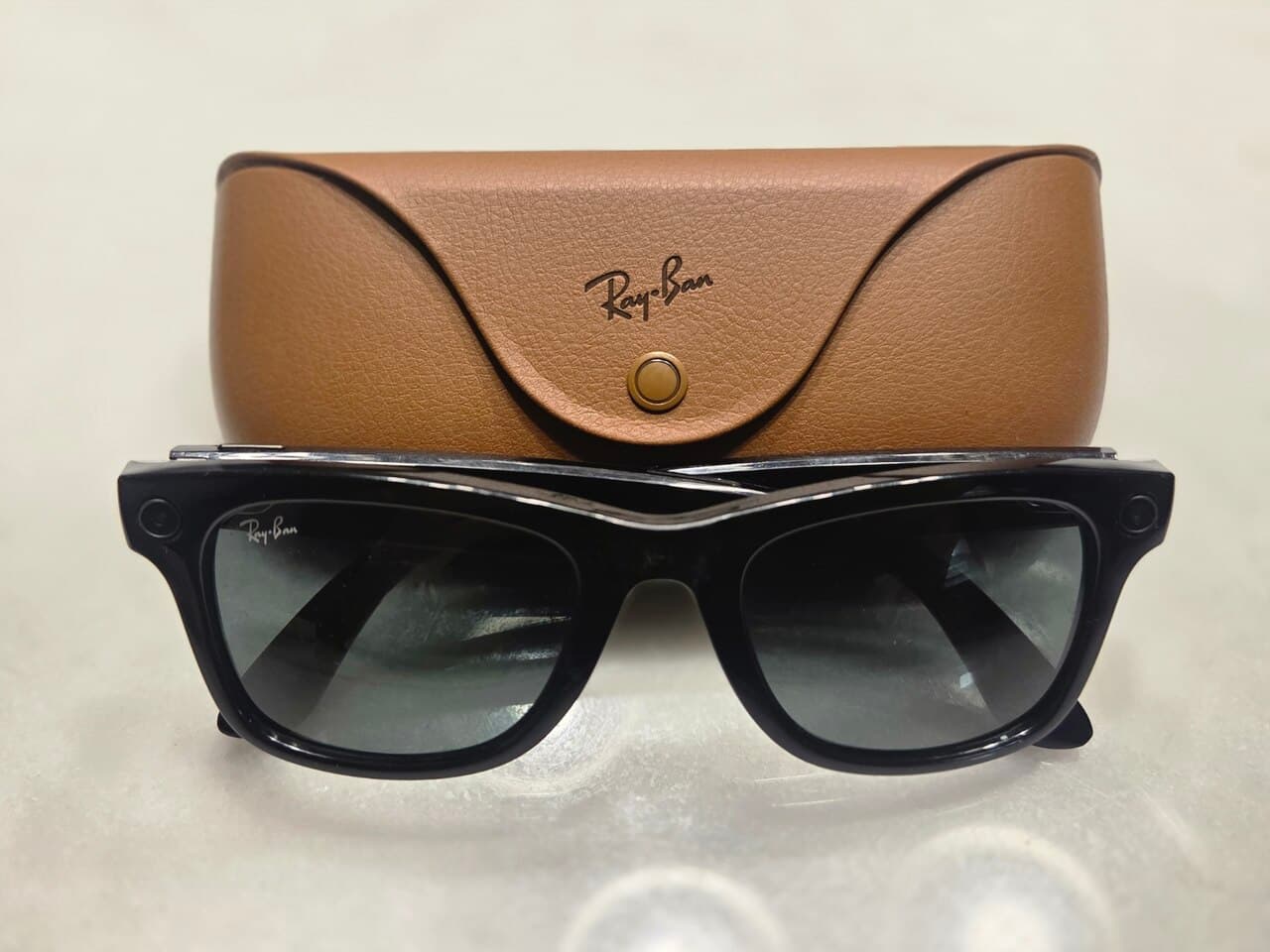
FCAT, the Fidelity Center for Applied Technology, had been watching the AI projects I was building on the side. They came back with a question of their own. Ray-Ban Meta glasses were selling, and nobody could say what a pair was for inside a financial company. So they handed me a set and a weekend and asked me to come back with something.
I wore them around the house. What kept surfacing was not a trading idea, it was a curiosity one. You see a product, or a line outside a store, or somebody using a thing you have never seen before, and the interesting question is not what it costs. It is who is on the other end of it, and how far back that chain goes. The problem with that question is that it dies fast. Nobody stands in a checkout line researching a supply chain, so by the time you are somewhere you would actually look it up, you have forgotten what made you curious.
Redefining what a watch-list watches
Peter Lynch ran Magellan at Fidelity on the idea that you should buy what you already understand, and that the things you use every day tell you more than a screener does. The catch has always been the gap between noticing something and doing anything about it. A watch-list is a list of tickers you already thought of. It has no way in from the world.
So the app takes what you are looking at and resolves it into four angles.
A diagram. On the left, four ordinary things somebody might be looking at: the coffee in your hand, a truck at the light, the earbuds you just opened, and the chair in the lobby. An arrow leads from all four to a two-by-two grid of the angles every scan has to cover. Maker, meaning who owns the brand. Supplier, meaning who makes the part nobody can swap out. Material, meaning what it is built out of. And market, meaning the fund that covers the whole theme.
Point GPT-4o at almost anything and it will hand back the first of those and stop. Levi's jeans, Levi Strauss. That answer is free and everybody already has it. The system prompt riding along with every photo exists to make the maker the floor instead of the ceiling, with a worked example written into it so the model copies a shape rather than interpreting an adjective, TSMC sitting behind a phone, its share of advanced chips, and why that matters to the stock.
Asking for a set number of ideas is a blunt instrument. On a product with a genuinely thin supply chain the model reaches to fill a slot, and nothing downstream checks whether a stretched idea is worth hearing before it reaches anyone's ears.
How it works
tap
the temple, on whatever you are looking at
photo
sent up with the analyst prompt attached
4o
names the companies standing behind the thing
json
tickers and reasons, in a fixed shape
quotes
a live price on each one from fastquote
tts-1
the summary, written to be heard
The loop runs end to end. Tickers pull live quotes from Fidelity's own fastquote service, so a spoken thesis arrives with a price, a day change, a sector and a P/E behind it instead of a guess. A session ID paired with a speech-generation counter keeps a newer scan from being talked over by an older one still finishing its sentence. Tapping a company opens the full read, and adding the whole set to a watch-list is one button, which is the part I cared about most. An insight is worthless if it evaporates the moment you walk away.
Turn the sound on for this one. The spoken answer is the product, and the player starts muted.
What you are watching is the phone half. Every photo in it was captured on the Ray-Bans and handed to this iOS app, which stands in for a real financial app rather than trying to be one, because the job was to prove the loop works. In use the answer arrives in your ear, and there is no honest way to put that on a web page, so this is what I can show you.
Some product thoughts
Smart glasses stopped being a curiosity while I was building this. IDC counted 2.7 million display-less smart glasses shipped in all of 2024. The first quarter of 2026 alone shipped 2.25 million, up 167 percent year over year, and the full-year forecast is about 13.6 million, with Meta holding 69 percent of the market.
The number that changed how I think about it sits on the other side. Adjust puts finance apps at 2 percent day-30 retention, down from 3 percent the year before, the steepest drop of any category they track. Ninety-eight of every hundred people who install a finance app are gone within a month. The ones who stay are engaged enough, with wealth management running about 31 percent stickiness in North America, but that is a small group who were already committed.
So the opening is not the faithful, it is everyone else, and what they need is a reason to open the app that has nothing to do with the market. Instead of waiting for a market event to pull somebody back in, the market is already around them, sitting in everything they can see, and sight is the whole trigger. It is about the cheapest engagement there is, because you were going to look at the thing anyway. What I cannot do is size it. Fidelity does not publish an account count, nobody publishes what a watch-list add does to how often people return, and I have no way to count how many people own both a brokerage account and a pair of glasses.
What's next
The prototype asked an investing question. The half that lasted was the learning one, and the idea now sits inside a larger financial education program at FCAT, pointed at what somebody could understand about the thing in front of them rather than what they should buy. I am part of that team now, partnering as an emerging tech lead.
I am still tracking the glasses themselves. The category now ships in a single quarter nearly what it shipped in all of 2024, so the version of this that felt like a stretch in December gets more ordinary every quarter.